Whole Class Junior Journal 57 Resource: Year 3 – Solar Power in Tokelau
Description
Unlock Reading Comprehension and Content Knowledge with the Science of Reading: Tokelau Solar Power
Fuel your Year 3 structured literacy program with this engaging resource, “Solar Power in Tokelau,” based on the Junior Journal 57 report. Seamlessly integrate Science of Reading principles while exploring Tokelau’s groundbreaking shift to 100% renewable energy (solar and coconut oil). This resource also provides a fantastic opportunity to celebrate Tokelau Language Week.
The Junior Journal 57 report “Solar Power in Tokelau” details Tokelau’s world-first achievement in transitioning entirely to renewable energy, explaining their motivations for moving away from fossil fuels and showcasing the positive impact on a local family.
Our Approach: Deep Comprehension Through Science of Reading
This unique teaching tool empowers students with deep comprehension strategies, robust vocabulary, strong sentence structure and punctuation skills, verbal reasoning abilities, and essential content knowledge – all underpinned by the Science of Reading.
Easy Implementation for Whole-Class Learning:
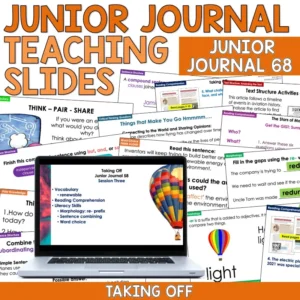
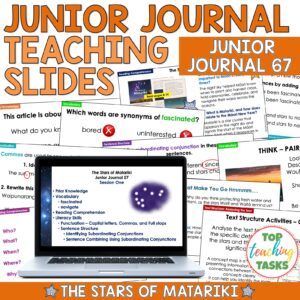
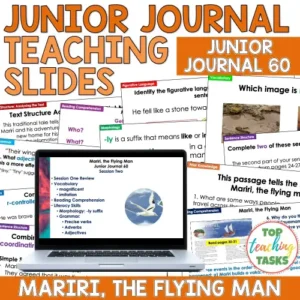
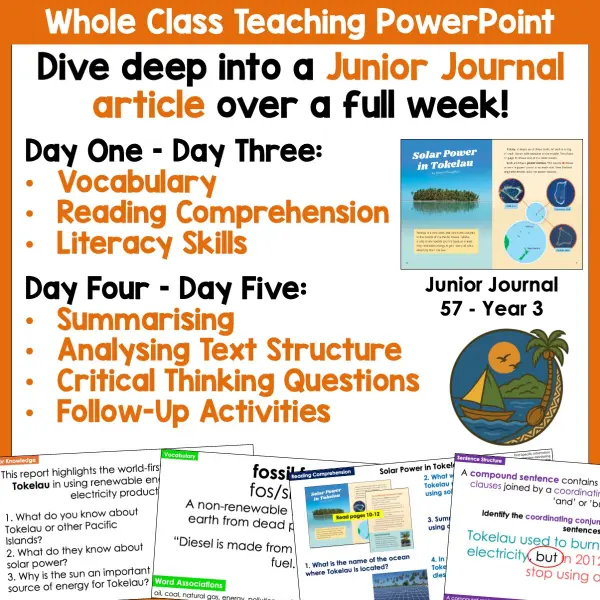
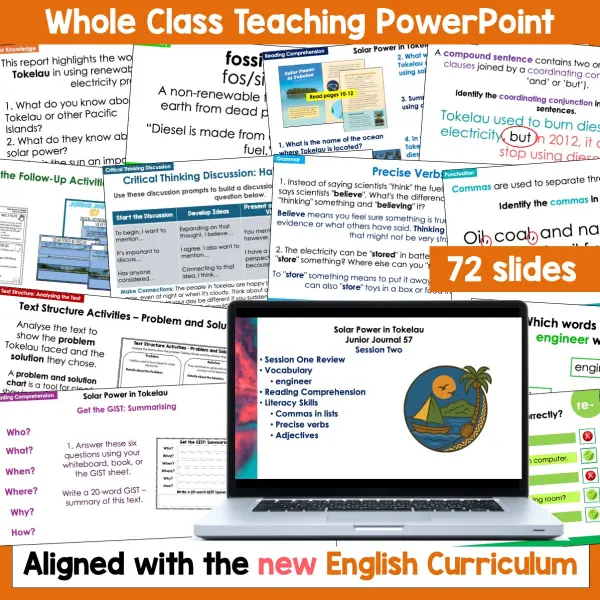
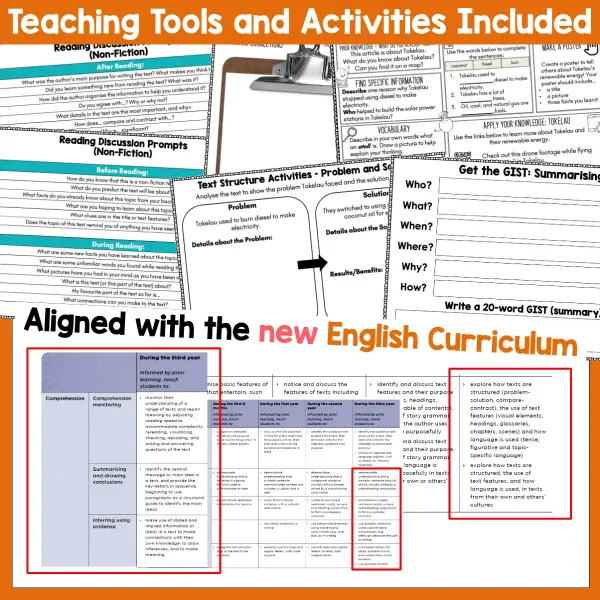
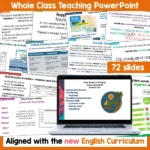
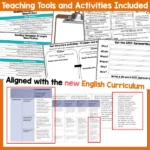
This resource includes a comprehensive 72-slide slideshow, supplementary worksheets, and effective graphic organisers.
Simply project the Junior Journal PDF and provide shared copies of the text (2-3 students per copy). The Presenter View-enabled slideshow provides a smooth, click-and-go lesson experience.
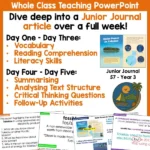
We’ve thoughtfully divided the text into three manageable sections for focused learning across three sessions, allowing ample time for rich vocabulary and content exploration.
Spark critical thinking and discussion with our included prompts, designed to engage students deeply with the text.
Extend learning on days four and five with:
- A GIST summarising activity
- A Problem and Solution text structure graphic organiser
- Thought-provoking questions to encourage deeper connections and inferences.
Key Learning Outcomes:
This resource strategically develops students’ ability to:
- Monitor Comprehension: Employ strategies like summarising, drawing conclusions, and using textual evidence.
- Engage in Deep Comprehension: Move beyond simple recall to actively process information.
- Strengthen Literacy Skills: Connect reading with key writing elements (sentence structure and punctuation).
- Summarise Effectively: Condense the main idea into a concise 20-word GIST, enhancing understanding and retention.
- Analyse Text Structure: Identify and understand the Problem and Solution structure within the text.
- Expand Vocabulary: Learn explicit definitions, see examples, and participate in semantic activities (synonyms/antonyms).
- Meet Curriculum Standards: Directly aligns with the New Zealand English Curriculum for Year 3, focusing on comprehension, summarising, and inferencing with evidence.
Benefits for Your Classroom:
- Fosters active learning and high student engagement through varied reading, discussion, and critical thinking tasks.
- Builds essential vocabulary and strengthens comprehension skills, making it accessible and beneficial for diverse learners, including those who find reading challenging.
- Encourages students to connect the text to their own understanding and the wider world, leading to deeper comprehension.
New Zealand Curriculum Links (Year 3):
This resource directly supports students in learning to:
- Monitor and confirm comprehension through annotation, rereading, questioning, answering, and visualising.
- Summarise and draw conclusions by identifying and using key supporting details.
- Make inferences by combining stated and implied ideas with their prior knowledge.
- Analyse text structure and language choices for specific effects.
- Think critically about texts by considering different perspectives and making connection