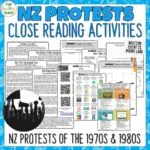

New Zealand Protests Reading Passages and Questions
Description
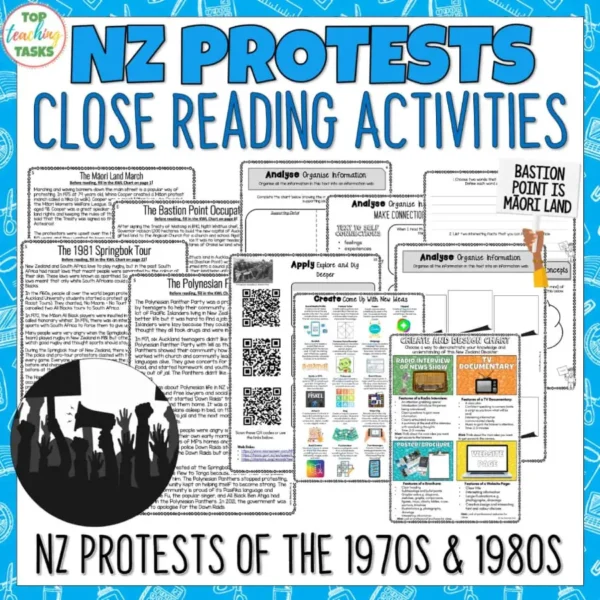
Explore four of the significant protest movements from the 1970s and 1980s that created change for Aotearoa New Zealand and its people, and shone a light on important causes, both locally and internationally. This New Zealand Protests Reading activity pack includes four non-fiction passages with a variety of unique and engaging text-dependent questions and higher-order thinking tasks.
These activities are great for your guided reading program or as homework tasks. Integrate these activities into your history and/or social studies projects!
In this New Zealand Protests Reading pack, you will receive:
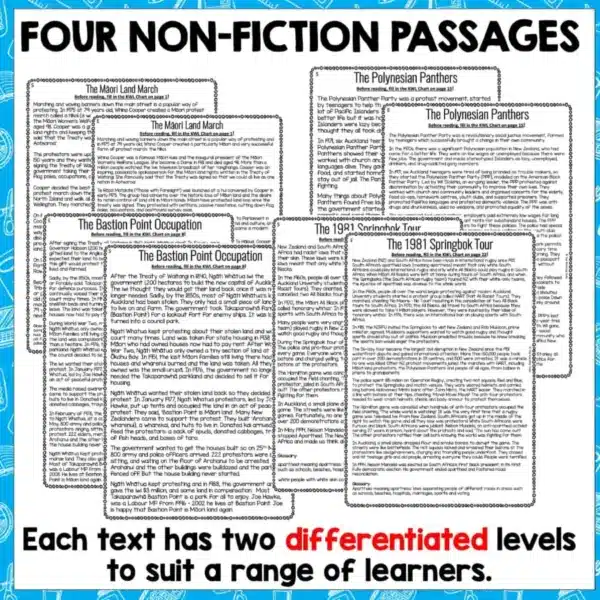
1. Four texts – all with an extended and scaffold version:
- The Māori Land March
- The Bastion Point Occupation
- The Polynesian Panthers
- The 1981 Springbok Tour Protests
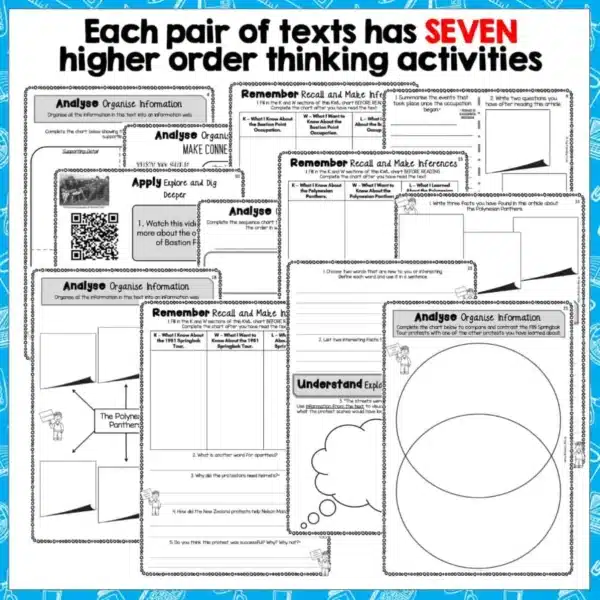
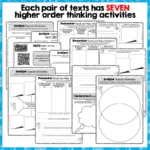
2. SIX corresponding NO PREP Higher Order Thinking Activities – that’s 24 activities in total.
Each passage features different activities!
- Remember
- Understand
- Apply
- Analyse
- Evaluate
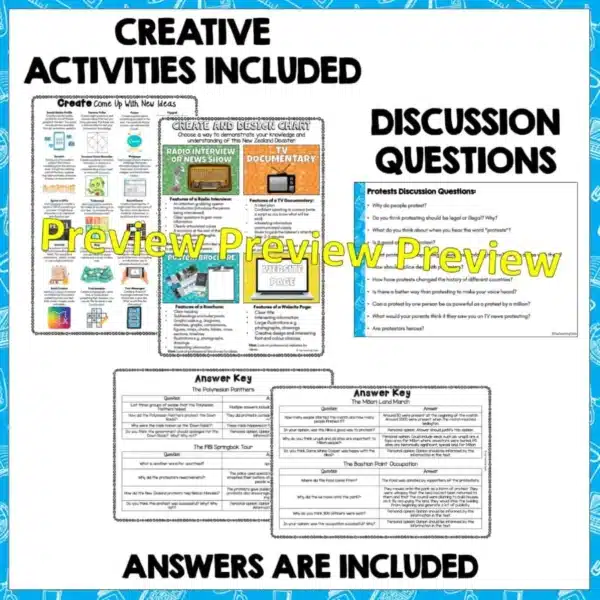
- Create
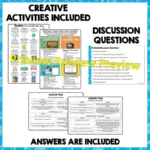
3. A set of broad discussion questions to encourage oral discussions and the sharing of opinions (evaluating – Higher Order Thinking).
4. A set of perspective cards to encourage students to consider a range of perspectives in each protest.
5. Three Graphic Organiser Examples
- Information Web
- Main Idea
- Venn Diagram
6. Teacher Answer Key for applicable questions
7. Two ‘Tips For Use’ pages with ways to use this resource in your classroom
What this resource is all about:
The purpose of this resource is to provide ready-to-go non-fiction passages and engaging higher-order thinking questions.
This resource is full of exciting, thought-provoking activities to grab your students’ attention AND hold it. The activities begin at the lower levels of Blooms Taxonomy (Remember, Understand, Apply) and move through to the higher levels (Analyse, Evaluate, Create).